Podcast 170 – Who is Cooking Tonight?
Learn English while learning about daily life in Australia, with Rob McCormack
Podcast Number 170 – Who is Cooking Tonight?
Hi,
I like the experience of eating an evening meal around the dinner table with my family. It somehow makes our family feel more together and can help to build a positive atmosphere within the family. This is especially the case when both parents take an active role in some aspect of the meal experience. In this podcast I am going to talk about my experience of preparing and enjoying an evening meal around the dinner table in Australia. In particular I am interested in the roles of the two parents in that process and how it has changed over the years.
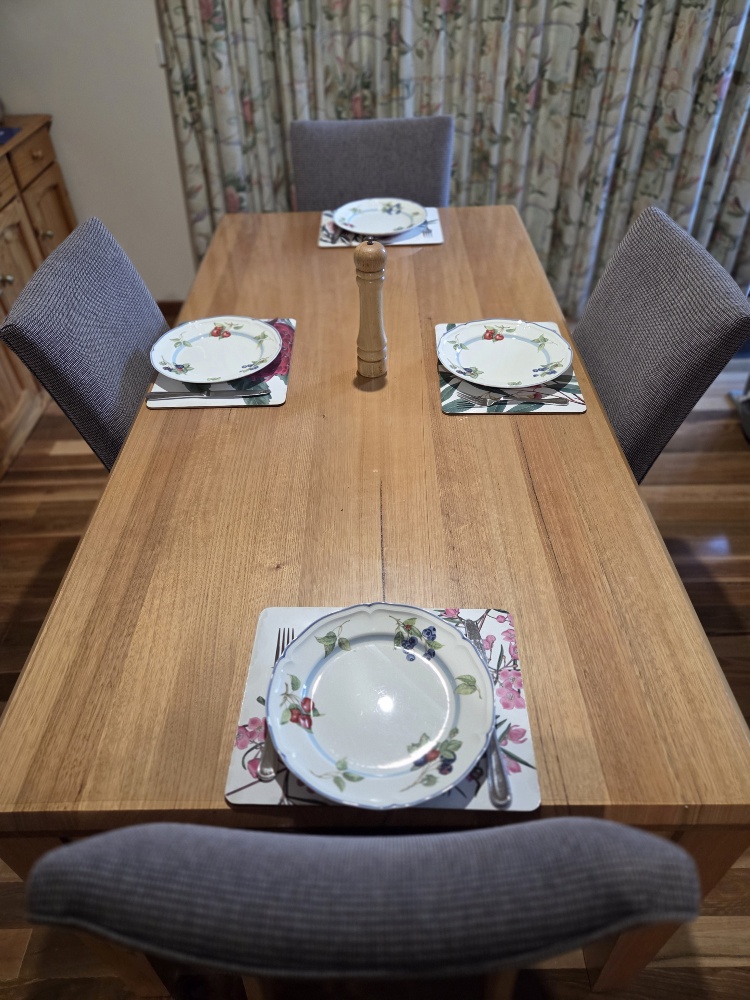
I can remember well from my childhood in the 1960s the experience of having the evening meal with my parents and siblings. It all revolved around the dinner table. In my case, our family had the dinner table in the kitchen, as the house was not very large and that was the only place for it. Today most Australian homes have a dinner table in what is called the meals area, which is usually in or next to the kitchen. This is where the family members have their everyday meals, including the evening meal. Many homes today also have a separate dining room, where more formal dining such as Christmas dinner or a meal with guests can take place. Some families will also use this for their everyday evening meal as well, although perhaps that is less common in my experience. Our current house has both a meals area next to the kitchen and also a formal dining room, although we find we don’t use the dining room all that much.
It’s interesting to look at how different families divide up the tasks of preparing for, and cleaning up after, the evening meal. When I was a child back in the 1950s and 1960s, my mother was the person who did the shopping, prepared the ingredients and then did the cooking. She also did most of the cleaning up, although I can remember being involved in drying the dishes, and also my father occasionally doing the washing up or drying the dishes. My mother was a stay-at-home mum for nearly all the years when her children were still at home. It was part of a common tradition back then that the stay-at-home wife did all the housework, including everything related to meals. My memory is that she worked hard to keep the household running smoothly, including at meal times.
The one exception to that rule would be when the outdoor barbeque was used. In that case, the father of the family would prepare the barbeque and cook the meat. I can clearly remember my father doing that. When the meat was cooked, he would hand the plate of cooked meat to my mother who would take over from there. My mother would have prepared the salads in the kitchen while the meat was cooking. It was my father who would then proceed to clean the barbeque and cover it up in readiness for the next time it was used. I think the same would have been true of most Australian families back then. I’m not quite sure why it was deemed normal for men to operate the barbeque, but not to get involved in the cooking activities in the kitchen. Every family I have seen today still follows that rule (including me) – the men cook when the outdoor barbeque is used.
When I became a parent myself in the 1980s, my wife became a stay-at-home mum until our youngest child was around 6 or 7 years old. During that time, she did the shopping and prepared the meals. My household job was to help with the clearing up after a meal, and also to be actively involved in getting the children bathed and to bed on time, including involvement in the reading of stories to them (which was a great delight). Later, when my wife decided that she would recommence her full-time career in education as a teacher and later as a university lecturer, our roles with respect to the job of preparing the meals changed. As we were both working, we shared the work of shopping, meal preparation and the clean up afterwards.
As illustrated in my own journey from child to parent, the roles of the two parents have changed a lot since the 1960s in the area of food preparation. In fact, I read about an Australian research study from 2025 which looked at the families of 435 fathers with children aged under 5 years, reported in the journal Public Health Nutrition. The researchers found that between 75% and 77% of these fathers had around half the responsibility for meal planning, shopping and cooking. That’s a very big change from the 1960s, where most men typically had no role. I have observed the young families of our two sons and they both have active roles in the household tasks associated with food preparation. These days, most men get actively involved and that is a good thing. Even so, it is interesting to note that, in this study, the researchers found that around one quarter of the fathers in the study still had a relatively small or no role in the meal planning, shopping and cooking. That becomes a problem in some families if the wife is also working full-time. The household work is not being evenly shared. Of course, it may be the case that the man has the primary role in bathing and bed-time routine for the children, which may well be a good way to share the duties and even out the responsibilities.
The whole issue of gender roles in society is a fascinating one, not only in home life but in the work place. Australia has been at the forefront of giving women more choice and more equality in their roles in society. However, there is still a lot more to do in that regard, and perhaps that is a topic for a later podcast.
If you have a question or comment to make, please leave it in the comments box at the bottom of this page. Or, you can send me an email at rob@slowenglish.info. I would love to hear from you. Tell me where you live, a little bit about yourself and what you think of my Slow English podcast. I will write back to you, in English of course. If you would like to take a short quiz to see if you have understood this podcast, you will also find it on my website. Goodbye until next time.
Rob
Vocabulary
active = when you are doing things
aspect = a part of
atmosphere = the overall feeling of an event or place
bathed = when someone has a bath
career = the time from starting your job until you finish working
current = today, now, what is happening at the moment
deemed = thought to be, agreed
delight = a joy, a pleasure
dinner = the evening meal, although it can also mean the midday meal, depending on the context
divide up = to share among 2 or more people
especially = (here) when something stands out from other things
everyday = (here) daily
exception = when something does not follow a rule or trend
experience = the feelings and memories you have of an event
formal = a special event or occasion
gender = whether you are male or female (man or woman)
guests = (here) people who visit you
illustrated = shown, explained
in particular = when talking about one thing or group of things amongst many others
ingredients = the food items you need to prepare a meal
involved = to be part of something or part of a process
journey = (here) going from one place or role to another
kitchen = the place in the house where the food is prepared
lecturer = a person who knows a lot about a subject and teaches others (usually at university)
occasionally = sometimes
operate = to manage, to control
preparation = the making of something
prepared = made
proceed = to go ahead, to continue
process = the steps you take in order to do something
recommence = to start something up again (which had stopped)
regard = (here) related to something
related to = connected to or about something else
relatively = compared to other similar things
researchers = people who study a subject or thing (e.g at university)
responsibility = when you are the one who must do a task
revolved = (here) is about, is centred around
salads = dishes made with green salad food (like lettuce, cucumber, etc)
siblings = your brothers and sisters
stay-at-home = when a person stays at home and does not work or have a job
take over = to take control of, to manage
tradition = something which has been done for a long time
typically = normally