


Learn English while learning about daily life in Australia, with Rob McCormack
Podcast Number 167 – Rooftop Solar Systems in Australia
(This podcast lasts 12 minutes and 20 seconds.)
Hi,
Australia has lots of sunshine. That’s why we have the highest rate of skin cancer in the world. However, there is an advantage to lots of sunshine, and that is free energy from the sun. Using solar panels, you can turn this sunlight into electricity. By putting solar panels on the roof of your home, you can make your own electricity to power all the electric appliances in your house, and even charge an electric car. Australia now has the highest number of rooftop solar systems per capita in the world, with 1 in every 3 homes having a rooftop solar system. That’s more than 4 million homes. In this podcast, I would like to talk a little about rooftop solar systems in Australia.
First, let’s talk about the benefits of having a rooftop solar system. Electricity costs have been rising steadily over recent years. In fact, since 2009/10 in Australia, the cost of electricity has doubled. In 2024/25, it costs around $0.29 per kilowatt hour. An annual bill for an average family of 4 can easily cost around $2400. Everyone needs electricity in today’s world to light our homes, cook our food, heat our water, cool the inside air on a hot day and operate all the many electrical appliances we all love to use. I think it is also fair to say that electricity prices will continue to rise. In such a situation, the idea of being able to generate a large part of your electricity for free, from the sun, sounds very appealing.
I am also concerned about climate change, so any change I can make in my household to reduce the use of fossil fuels is also helping to reduce greenhouse gas emissions. We produce these greenhouse gases when we burn fossil fuels like coal, oil and gas, especially for making electricity. In 1998/9 in Australia, we used fossil fuels to make around 91% of our electricity. By 2024, this had reduced to 64%, made up of coal 45%, gas 17% and oil 2%. The remaining 36% of electricity in 2024 was produced from renewable sources, such as wind and solar. Having a rooftop solar system is a good way for each household to make a contribution towards reducing the amount of greenhouse gases we all produce. This helps in the fight against climate change.
Our federal government have been encouraging the use of solar panel systems since the early 2000s by offering rebates (or grants) which reduced the cost for the homeowner of a rooftop solar system. State governments are now also offering incentives to encourage people to install a rooftop solar system. These rebates together reduce the cost by more than 40% for the installation of a typical rooftop solar system. In 2026 it is also possible to receive generous government rebates to allow homeowners to install a battery attached to their rooftop solar system. This means you can store electricity generated during the day by your solar panels and use it to power your household, or charge your electric car, during the night. Added to this, improvements in the technology and manufacture of rooftop solar systems have, by 2024/25, reduced the cost of a kilowatt hour from a rooftop system by around 75% compared to 2010. In other words, rooftop solar systems are getting better and, at the same time, are also getting cheaper.
A rooftop solar system also protects you to some extent from future electricity price increases. Because you are making your own free electricity for much of the day, you are not having to buy as much electricity from the network. To some extent you are therefore protected against future price increases, as much of the electricity you need will be free from the sun. The price of that electricity will never go up!
Another advantage of rooftop solar systems is the ability to sell some of your excess solar panel electricity back to the network. This is called feed-in electricity, because you are giving (or feeding) electricity back into the network. In this case, instead of paying the electricity provider for electricity, your electricity provider pays you. When solar rooftop systems first became popular in Australia in the early 2000s, the feed-in rate per kilowatt hour (the amount the provider pays you for your excess electricity) was quite high. It was actually close to the cost of buying electricity. However, these rates have dropped over the last few years and now are quite low, compared to the cost of buying electricity. This means the amount you can earn when doing this is quite low. Therefore, it’s no longer the big advantage it used to be. This is not such an issue for me however, as having a rooftop solar system is not about earning money, it is about saving money and helping the planet.
Australians like the idea of making electricity from a solar panel system on their roof. My wife and I have been considering this idea for quite a while. We have recently taken advantage of federal and state government rebates and installed a rooftop solar panel system on our home, including a battery.
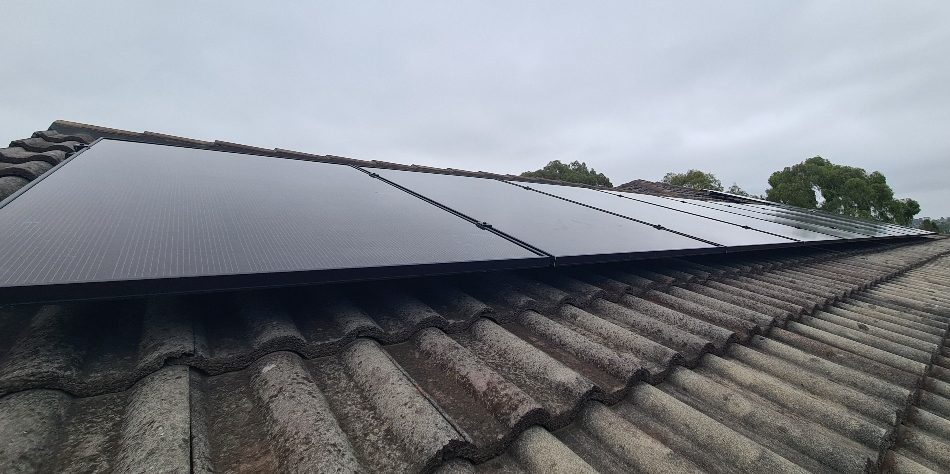
A section of the solar panels on the roof of our home.
It’s amazing how well the system functions, even in conditions where the sun is completely hidden on cloudy days. Yes, it produces less electricity, but it still keeps producing, usually more than we are using. Using an online app, we can monitor the system and see how well it is performing. Our first electricity bill showed a reduction of around 50% during February and March which is a hot part of the year, when our big electric air conditioner was working overtime. We are very pleased with the outcome so far.
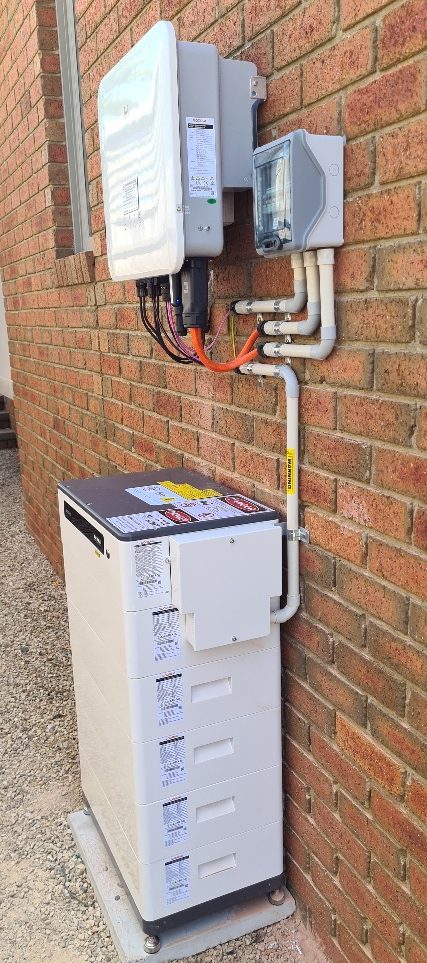
The battery stores electricity generated during daylight hours, for use later when the sun is not shining.
The Clean Energy Council in Australia reports that, in the second half of 2025, the 4.2 million rooftop solar systems in Australia produced around 14% of all the electricity generated in Australia. This figure is double what it was in 2020, so you can see that Australians love their rooftop solar. I think that solar rooftop systems will become increasing important in providing our electricity in the future.
If you have a question or comment to make, please leave it in the comments box at the bottom of this page. Or, you can send me an email at rob@slowenglish.info. I would love to hear from you. Tell me where you live, a little bit about yourself and what you think of my Slow English podcast. I will write back to you, in English of course. If you would like to take a short quiz to see if you have understood this podcast, you will also find it on my website. Goodbye until next time.
Rob
Podcast 167 Quiz - Did you understand the podcast?
You can take the quiz as many times as you like.
Vocabulary
ability = when you are able to do something special
advantage = a good thing about an idea
air conditioner = a device which cools the air inside a house or building on a hot day
appealing = when something sounds good, is wanted
appliances = things which use electricity to help you do something e.g. toaster, microwave
attached = connected to something else
average = typical, normal
battery = a device for storing electricity
benefits = good things about an idea, which help you
bill = when a business sends you a request for payment
charge = fill a battery with electricity
cheaper = costs less
climate change = increases in the world’s temperature caused by burning of fossil fuels
concerned = worried about
contribution = when you do something which is good for yourself and others
earn = when you receive money for something you have done
electricity = a form of energy which flows down wires and makes appliances work
encouraging = when you tell someone to act in a certain way, or to take some action.
excess = after you have taken or used what you need, the rest is excess
future = tomorrow, next week, next year
generate = make electricity
generous = (here) high in value
greenhouse gas = something in the air which traps the heat from the sun, raising the temperature of the earth, e.g. carbon dioxide
hidden = when something can’t be seen
incentives = things which encourage you to do something (like a discount, or a rebate)
install = set up, put in place
light = (here) make the lights in a room or house shine.
manufacture = the making of something
monitor = (here) to look at and see what is happening
network = all the connected wires which carry electricity around a country
outcome = the result
per capita = an amount of something for every person in a country
performing = how well (or not) something is working
power = (here) make a machine work
produced = made
protected = (here) when a bad change is prevented
provider = giver, seller
providing = giving
rate = a fixed amount for each amount of something else, for example 12 for every 100.
rebates = money given back to you (like a discount), so that you don’t pay the full price
reduced = made smaller
remaining = what is left after all the other things have been taken
renewable = can be made or used again. E.g. sunshine
solar panels = flat black panels covered in glass which can turn sunshine into electricity
steadily = at a constant speed
technology = (here) the way things work, usually means computers or technical things
To some extent = partly
typical = normal